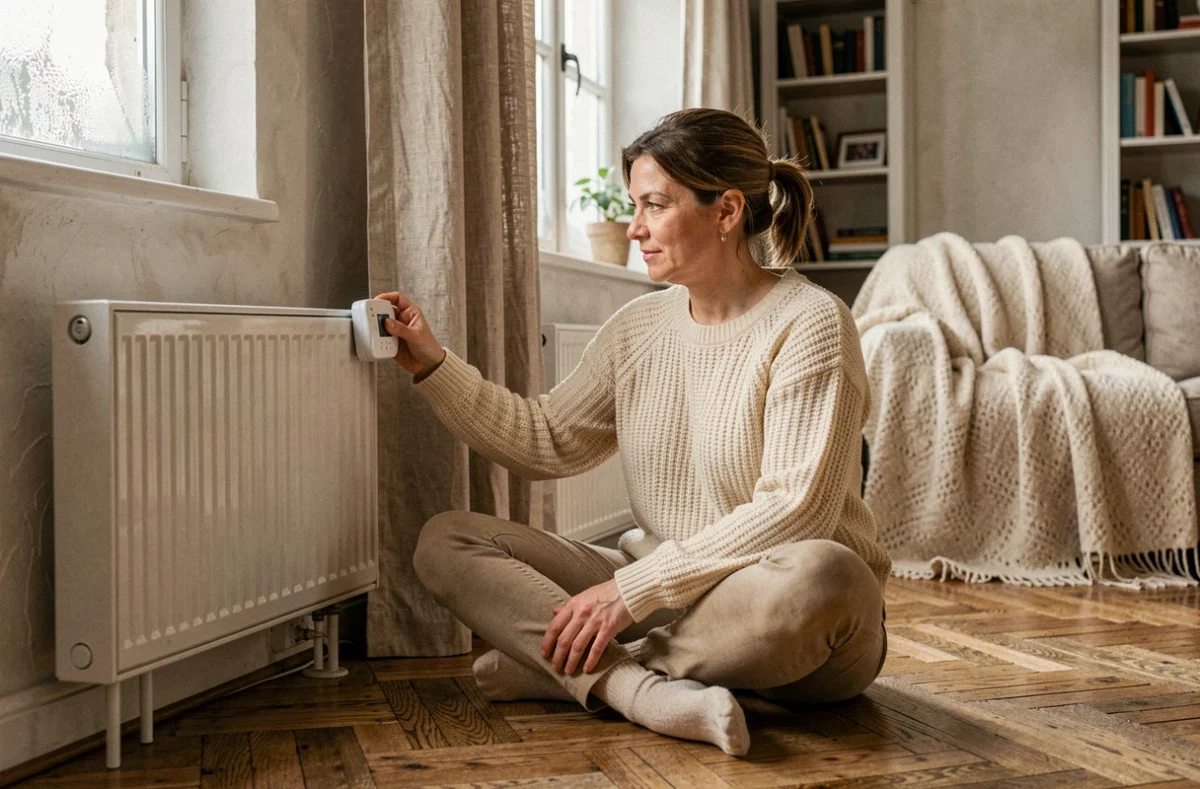
The heating bill represents the largest portion of a household’s energy expenses. Before considering replacing equipment or undertaking renovations, some adjustments and habits can already significantly reduce consumption without sacrificing thermal comfort.
Set Temperature and Programming: The Duo That Weighs Heavily on the Heating Bill
Have you ever noticed that the difference between 20 °C and 21 °C is hardly felt in daily life? On the bill, however, each additional degree increases consumption by about 7% according to Ademe. This is the most direct lever.
In living areas, a setting of 19 °C is sufficient during the day. In bedrooms, 17 °C promotes better sleep while limiting expenses. When the home is empty for several hours, lowering the temperature to 16 °C and then restarting the heating before returning helps avoid heating unnecessarily.
This is where a programmable thermostat makes a difference. It adjusts the temperature according to time slots, without you having to think about it every morning. For those who want to delve deeper into the topic of control equipment, you can discover the Chauffage Économique website which addresses these issues in detail.
A regulatory point to note: the obligation to install a programmable thermostat has been postponed for existing homes. Therefore, it is not an immediate legal urgency, but the investment remains one of the most profitable in the short term.
Light Insulation of Windows and Doors: Actions That Cost Less Than Ten Euros
Cold air does not only pass through walls. Windows, doors, and their seals represent a source of heat loss that is often underestimated.
A simple test can help identify leaks: run your hand along the frame of a closed window on a windy day. If you feel a draft, the seal is worn or missing.
What You Can Install Yourself in One Hour
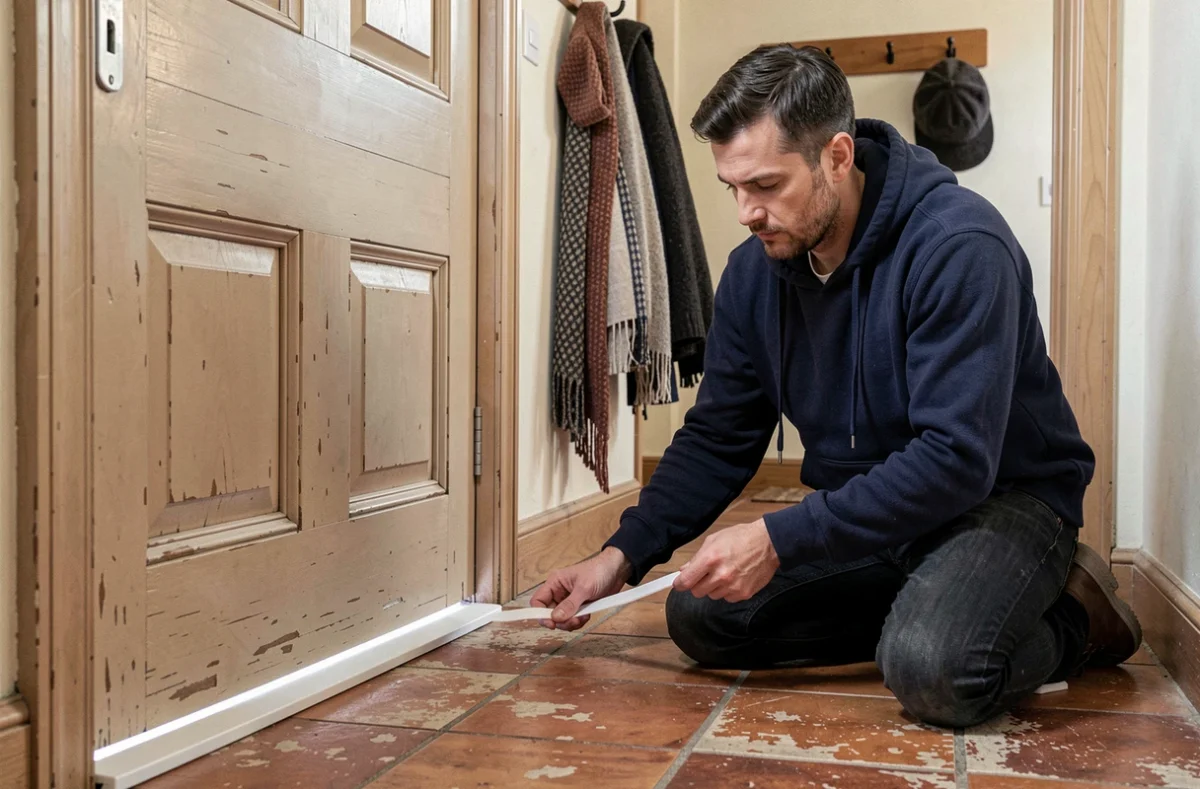
- A foam or rubber adhesive seal on the window frame, to be replaced each season if necessary. The cost is negligible, and the effect is immediate.
- A door draft stopper (or brush door bottom) to block the cold air that seeps under doors leading to the outside, an unheated hallway, or a garage.
- A thick curtain in front of a bay window or patio door. The fabric creates a buffer layer that limits heat loss through radiation at night.
These actions do not replace efficient double glazing, but they correct the most common defects without any heavy investment.
Radiators: Maintenance and Clearance for Maximum Efficiency
A dirty or poorly bled radiator emits less heat. It continues to consume the same energy, but some of it is lost. The result: you raise the thermostat to compensate, and the bill rises.
Bleeding the radiators at the beginning of each heating season takes just a few minutes per unit. Simply open the bleed valve at the top of the radiator, let the air escape until water flows, and then close it. This restores a uniform circulation of hot water throughout the system.
Another often overlooked reflex: dusting the fins. Dust accumulated between the elements acts as an insulator and reduces heat distribution in the room.
The Classic Mistake of Placing Furniture in Front of the Radiator
A sofa, shelf, or curtain pressed against a radiator blocks convection. Heat gets trapped behind the obstacle instead of circulating in the room. A minimum space of fifteen centimeters in front of and above the radiator is enough to restore normal operation.
For radiators mounted on an exterior wall, a reflector (rigid aluminum sheet) slipped between the wall and the unit redirects heat back inside instead of allowing it to pass through the wall. This small accessory is inexpensive and improves efficiency without altering the installation.
Shutters, Curtains, and Solar Gains: Managing Free Heat
During the day, the sun entering through a south or west-facing window warms the room at no cost. Opening the shutters and curtains during sunny hours allows you to capture this free energy.
At night, the reasoning reverses. Closing the shutters reduces heat loss through glazing by about a third compared to a bare window. It’s a daily action that requires no purchase, just a bit of discipline.
Why this difference? The shutter creates an air layer between it and the glass. This layer of still air acts as an additional insulator. The more airtight the shutter is (well-fitted roller shutter rather than slatted shutters), the more pronounced the effect.
Financial Assistance to Go Further: What Has Recently Changed
The actions described above cost almost nothing. When considering a more ambitious step (attic insulation, boiler replacement, heat pump), the budget can quickly rise. Public assistance exists, but its parameters are regularly evolving.
A decree from September 4, 2026, opened a derogation allowing, in certain cases, to benefit from a CEE bonus for the early replacement of certain boilers installed before January 1, 2021. This scheme does not apply to all equipment or all households, but it can significantly alter the remaining costs.
Since October 1, 2026, low-income households can access an integrated offer combining heat pump installation, electricity supply, maintenance, and management, subject to resource conditions and type of housing. This type of scheme aims to replace gas or oil heating with an electric solution.
The eligibility criteria for MaPrimeRénov’ have also been adjusted. Checking the current conditions before signing a quote remains the most cost-effective precaution: a poorly prepared file can lead to the loss of assistance.
Reducing your heating bill starts with free or nearly free actions: adjusting the temperature, bleeding the radiators, sealing air leaks, using shutters. These cumulative habits weigh much more than any equipment installed in a poorly managed home on a daily basis.