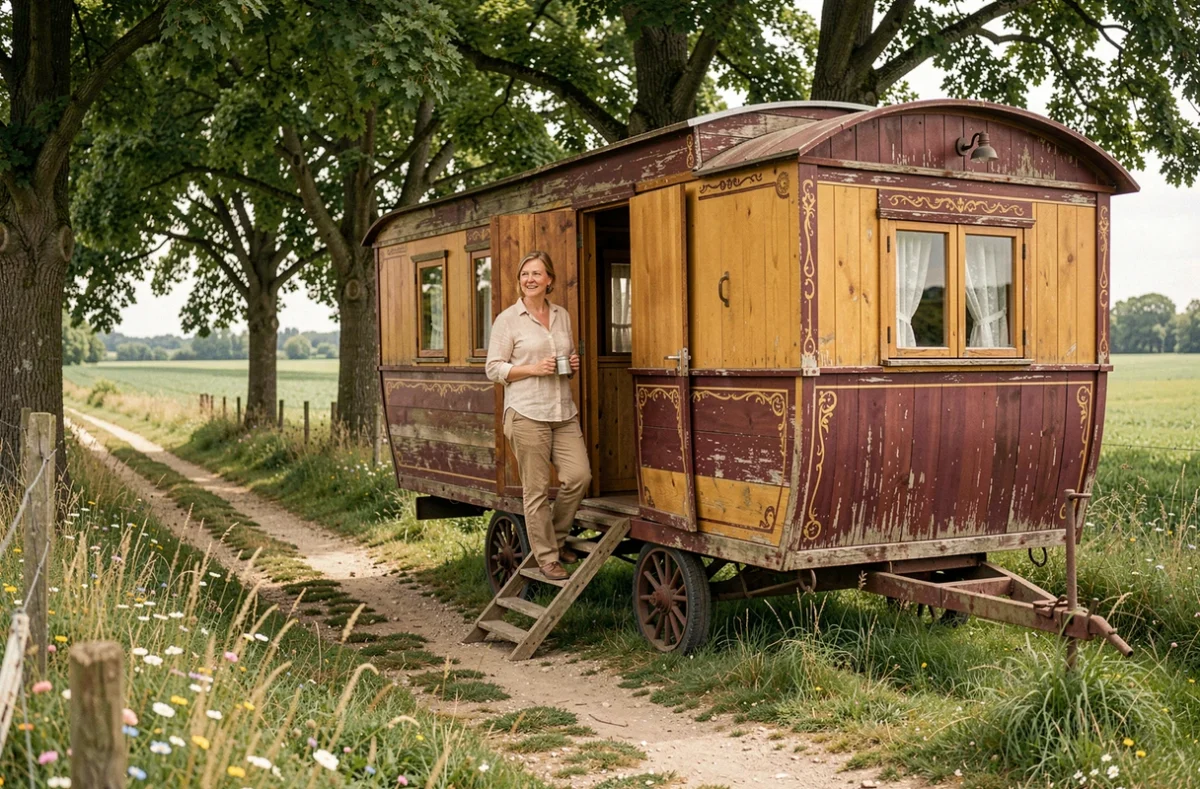
The caravan evokes an imaginary of slow travel, detours, and nights under the stars. On the ground, the reality of the French offer is more nuanced: the majority of caravan stays offered today are not itinerant. They are fixed accommodations, set up on private land, campsites, or tourist domains. Understanding this gap between the image and the actual product allows for better selection of one’s experience.
Fixed caravan or itinerant caravan: two distinct experiences
The word “caravan” covers very different realities depending on the providers. A caravan placed in a garden, connected to water and electricity, does not offer the same adventure as a caravan pulled by a horse on rural paths.
The listings visible on booking platforms almost always correspond to fixed accommodations. The caravan then becomes a form of glamping: an unusual lodging, often comfortable, but without movement. The charm lies in the wooden architecture, the limited space, and the natural setting.
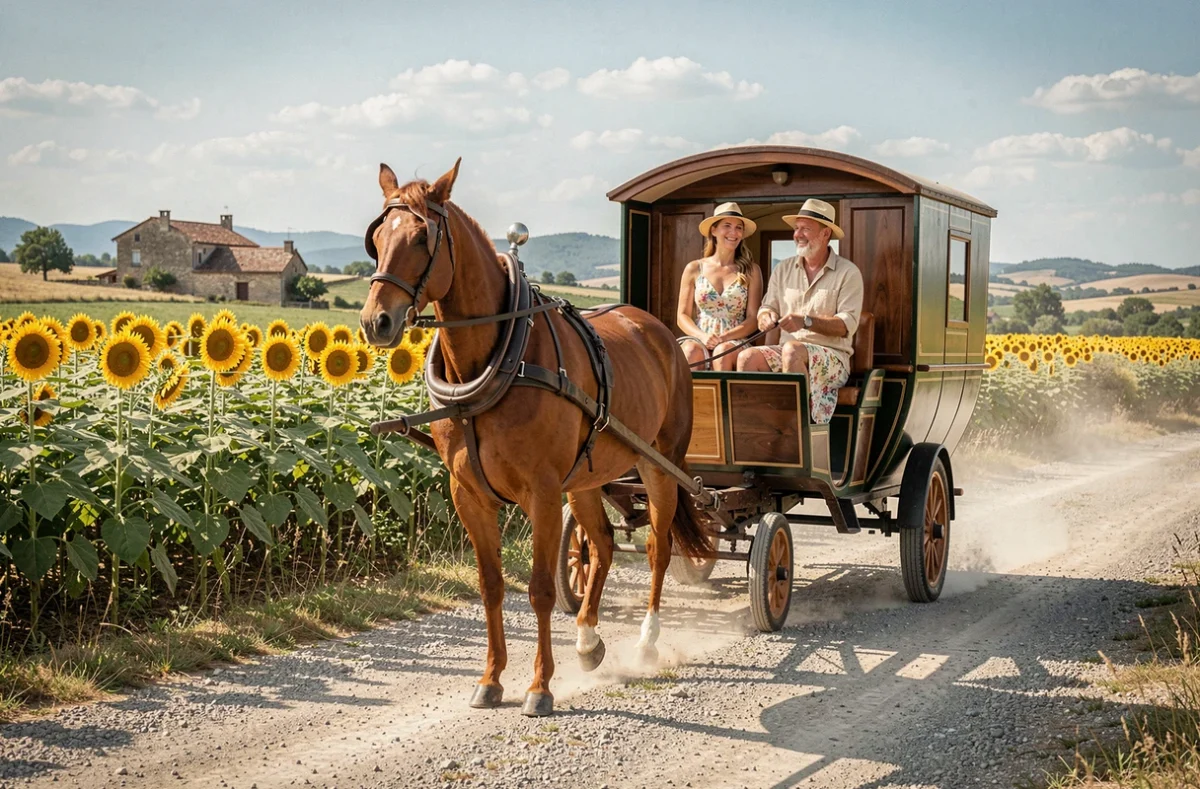
The journey in a caravan in the strict sense, with an itinerary, stops, and a horse, also exists. This format remains rarer and requires different organization. To find options that include a real route with stops and discovery of the territory, the Dormir En Roulotte website lists several offers of this type across France.
The distinction between fixed and itinerant is not trivial. It conditions the pace of the stay, the level of comfort, the duration, and the budget.
Regulations and installation: what the land imposes on the caravan
The legal framework of a caravan depends on one main criterion: its actual mobility and its mode of installation. A caravan that retains its wheels and can be moved does not fall under the same regime as a structure placed on foundations, permanently connected to networks.
In this second case, the caravan can be reclassified as a construction under the Urban Planning Code. A planning permission then becomes necessary. Articles R.111-41 and following of the Urban Planning Code regulate these situations.
Agricultural and natural zones: often ignored constraints
Installing a caravan for tourism in agricultural or natural areas is not automatically authorized. The local urban planning plan (PLU), the municipal map, and areas with limited size and capacity must be checked in advance. The land matters as much as the accommodation itself.
For mobile leisure residences, the regulations restrict their installation to campsites, residential leisure parks, and classified holiday villages. An owner who offers a caravan on their private land without authorization exposes themselves to penalties.
The traveler is not directly concerned by these administrative procedures. However, it is in their interest to verify that the chosen accommodation is declared and compliant, if only for insurance reasons in case of an incident.
Family stay in a caravan: real comfort and practical limits
The caravan attracts families with its cabin-on-wheels aspect. Children see it as a playground, while parents view it as a disconnected break. Feedback varies on the actual comfort, depending on the provider and the season.
Some points deserve to be checked before booking:
- Does the announced capacity correspond to a space that is actually livable for a family with children, or is it a tight extra sleeping arrangement?
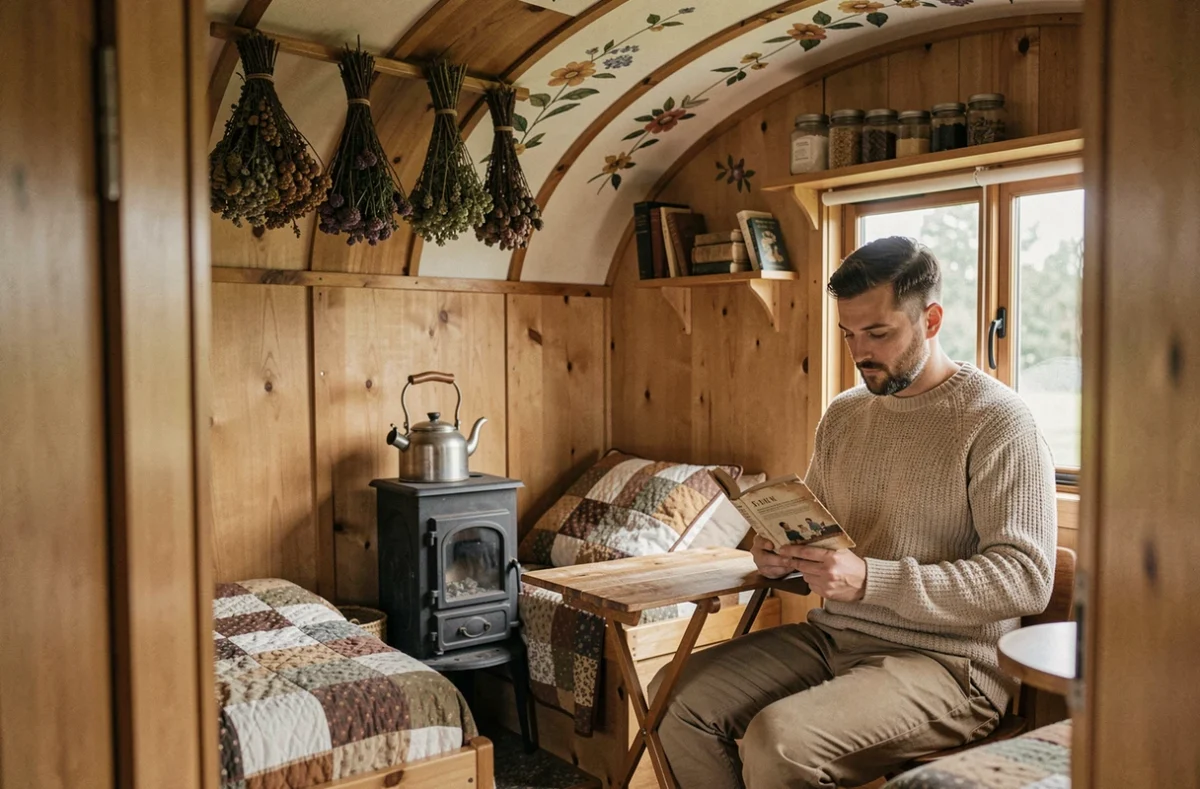
- Thermal insulation varies significantly from one caravan to another: a stay in April or October can become uncomfortable without adequate heating
- Access to running water and sanitation is not always integrated into the caravan. Some accommodations offer shared sanitation several dozen meters away
- The presence of farm animals or horses on the property is an asset for children but requires increased vigilance for the youngest
A well-equipped caravan offers a true family getaway, provided one does not project the comfort of a classic gîte onto it. The experience relies on accepting a reduced space and a pace dictated by nature.
Public aids and structuring of unusual offers in France
Unusual accommodations, of which the caravan is a part, are receiving increasing attention from regional tourism policies. Recent aid schemes favor structured projects marketed online rather than isolated units.
This orientation has a direct consequence on the available offer. Caravans integrated into a domain (farm, park, campsite) more easily obtain funding to improve comfort, signage, and digital visibility. Isolated caravans, run by individuals, struggle more to structure themselves.
What this changes for the traveler
The offer of caravan stays in France tends to professionalize. Accommodations linked to a domain or network generally offer clearer services: transparent pricing, cancellation conditions, detailed descriptions. The available data does not allow for a conclusion on whether this structuring systematically improves the experience, but it facilitates comparison between offers.
The traveler looking for an authentic nature experience in a caravan benefits from consulting multiple sources. Generalist platforms mainly reference fixed accommodations. Specialized sites in itinerant travel or unusual lodging allow access to less standardized options, sometimes including driving a team or farm stops.
The caravan stay remains a niche in the French tourism landscape. Its appeal lies precisely in this artisanal character: each caravan tells the story of the place that hosts it. Checking the regulatory framework, adjusting comfort expectations, and distinguishing fixed accommodation from true itinerant travel are the three reflexes that separate disappointment from a memorable experience.