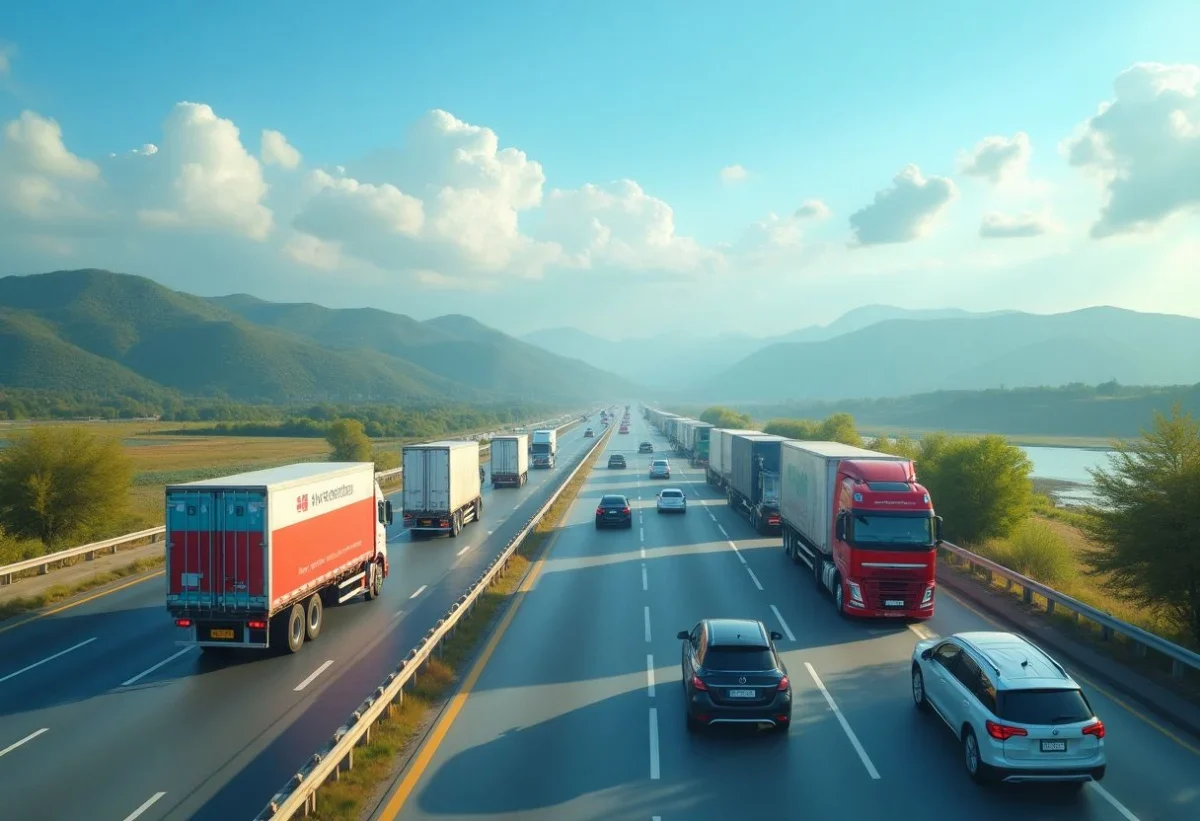
The winding roads of transport in England are dotted with complex challenges and lucrative opportunities that emerge between France and England. In the shadow of the Channel, this sector is vital for international and regional trade, playing a determining role in the European economy. The road carrier finds itself on the front line, facing often changing weather conditions, regulatory requirements, and logistical pressures that characterize cross-Channel traffic.
The logistical challenges for carriers in England
Carriers in England face a series of logistical challenges that require ongoing expertise and adaptation. Each step of the process requires particular attention to ensure the smoothness of operations.
Regulatory constraints are a major first obstacle. Since Brexit, customs rules have been tightened, necessitating more comprehensive documentation and increased checks. Carriers must equip themselves with advanced digital tools to effectively track and manage customs formalities and waiting times.
Infrastructure is another essential aspect to consider. British roads, often congested and aging, pose considerable challenges in terms of planning and fleet maintenance. Investments are needed to modernize routes and improve traffic flow, which requires collaboration between local authorities and transport companies.
Impact of Brexit on carriers
The impact of Brexit has transformed the transport landscape in England. This upheaval has changed trade rules and directly affected carriers, pushing them to readjust their strategies.
- Customs changes: The introduction of new tariff and non-tariff barriers has complicated cross-border transactions. Carriers must now navigate more complex customs systems, thereby increasing costs and delays.
- Trade agreements: Negotiations for new agreements have also influenced logistics operations, imposing specific restrictions and quotas. Companies must be agile to adjust to these changes.
- Labor regulations: Rules regarding the employment of European drivers have evolved, creating additional constraints for recruitment and human resource management.
Technology and innovation for carriers
In a world where technology continues to advance, carriers in England must leverage innovations to remain competitive and efficient.
The digitalization of the sector has become a necessity. Fleet management systems allow for optimizing routes, reducing fuel consumption, and improving safety. These tools provide real-time visibility into operations, thus facilitating strategic decision-making.
The use of green technologies is also becoming essential. The transition to more sustainable logistics involves adopting electric and hybrid vehicles, as well as improving charging infrastructure. Eco-friendly initiatives are taking an increasingly prominent place in carriers’ strategies.
The importance of safety and training
Ensuring the safety of transport operations is an undisputed priority for every carrier in England. Ongoing training for drivers and compliance with safety standards are essential to minimize accident risks and optimize service.
- Driver training: Training programs should include modules on road safety, stress management, and route optimization. These skills are crucial for facing daily challenges.
- Vehicle maintenance: Regular and rigorous maintenance of vehicles is essential to prevent breakdowns and ensure delivery reliability.
- Regulatory compliance: Carriers must ensure compliance with current safety standards, particularly regarding driving and rest times.