
Improving or maintaining a home means bringing together technical, regulatory and practical information that varies depending on the building. In 2026, the supported pathway under MaPrimeRénov’ illustrates this complexity: it is based on an energy audit and aims to improve the home’s energy rating by at least two classes by combining insulation, ventilation and heating upgrades. Finding reliable advice for your home starts with assessing the source, then checking that the recommendation applies to your situation.
Home advice online: how to spot content influenced by advertising
A first check of a website’s reliability is whether it is transparent about commercial interests. Regulations require advertising websites to follow rules on how legal notices are presented, providing a practical way to assess whether a recommendation is impartial.
An article that recommends a product without disclosing a commercial partnership should be treated with caution. By contrast, public information platforms (France Rénov’, ADIL, regional health agencies) have no products to sell. Their technical guides start with an assessment of the home, not a product catalogue.
For anyone looking to discover FoyerLuxuria.fr and Pôle Aménagement Maison, the appeal lies in its collection of topic-based content covering both interior design and routine maintenance, organised by project type rather than brand.
Check whether the website clearly discloses its commercial partnerships before following a product or service provider recommendation. This simple check rules out a significant proportion of biased advice.
Assessing your home before renovations: why an energy audit makes all the difference
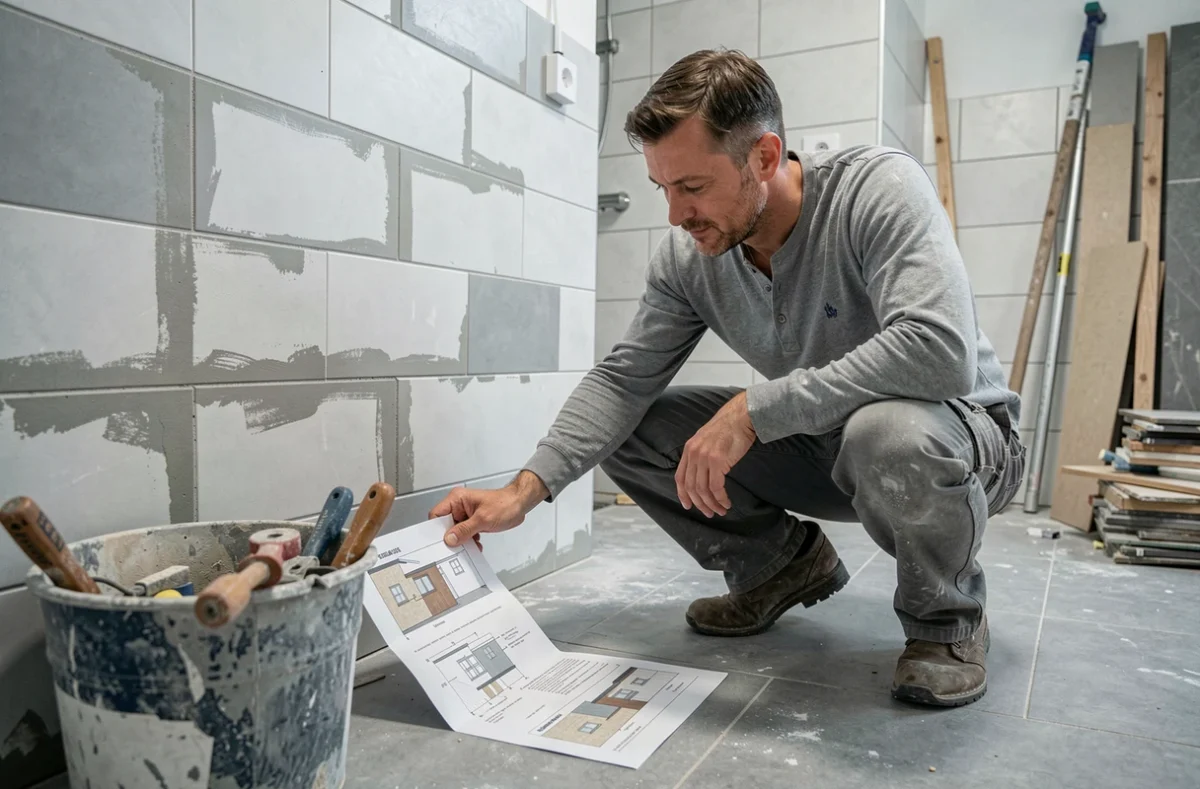
The most common temptation is to focus on a single expense (replacing windows, installing a smart thermostat) without looking at the bigger picture. The supported pathway under MaPrimeRénov’ addresses this by requiring a comprehensive energy audit as the starting point.
The audit identifies actual heat loss in the building and prioritises the work. Insulating an attic without addressing ventilation, for example, can make damp problems worse. Qualitel points out that inadequate ventilation encourages condensation and mould, and that an EPC alone does not provide information about indoor air quality or acoustics.
What the audit covers—and what it doesn’t
The audit covers the thermal envelope, heating systems and hot water production. It generally does not cover the condition of electrical systems, ageing plumbing or structural issues (cracks, subsidence).
Reliable home advice therefore draws on several assessments. Even a homeowner with a favourable energy audit may still have rising damp in the walls, which an EPC will not detect.
- The energy audit prioritises insulation, ventilation and heating work according to its actual impact on the home’s energy performance.
- An EPC does not provide information about air quality, acoustics or damp: these aspects require additional checks.
- For some MaPrimeRénov’ supported pathway applications where the final payment request is submitted from 1 September 2026, the project must not result in the installation or retention of a heating system that uses fossil fuels in a detached house.
Mould and damp: identify the cause before cleaning
The most widely shared home maintenance content offers cleaning remedies (white vinegar, baking soda, diluted bleach). These solutions address the visible symptom, but rarely the cause.
Where mould appears can point to its source. Marks near windows or in the corners of exterior walls suggest condensation caused by poor ventilation or a thermal bridge. Marks at the bottom of a wall may indicate rising damp. Marks higher up are more likely to point to water ingress through the roof or façade.
When to call in a building professional
Cleaning without fixing the cause means the mould is likely to return within a few weeks. A France Rénov’ adviser can provide free guidance on finding the right assessment. A building professional (damp specialist, building physics consultancy) can help when the problem goes beyond a simple ventilation issue.
A practical rule: if mould returns after two cleanings spaced a few months apart, the problem is structural, not superficial. An online article that fails to make this distinction is offering incomplete advice.

Generic or tailored advice: how to tell the difference
A home improvement tip found on social media or a décor blog may work in a modern apartment but fail in an old stone house. Reliable advice makes clear the conditions under which it applies.
- Reliable advice specifies the type of building it applies to (detached house, apartment, old or recent construction).
- It explains the recommendation’s limitations (climate, aspect, existing materials).
- It distinguishes between tasks homeowners can do themselves and those that require a qualified professional (RGE-certified contractors for energy-efficiency work, for example).
- It refers readers to a free public service (ADIL, France Rénov’, ARS) for complex situations.
Good maintenance advice explains when it does not apply. This is the most reliable sign of a quality source. Guides that promise universal solutions overlook the real diversity of French homes, from a Breton longhouse to a suburban house built in the 1980s.
Checking at least two different types of source (one institutional and one specialist) before starting work remains the safest way to avoid a project that is unsuitable for your home.